Get to Know Laser Beam a Bit Better Before They Return Again for Their Another Amazing Performance
Contents
- 1 What is police radar and how does it piece of work?
- 2 How does a radar gun calculate your speed?
- 3 Can radar track multiple vehicles?
- 4 What are X band, K band, & Ka band?
- 5 What practise those bands mean on my radar detector?
- 6 How authentic are law radar guns?
- 7 How do law officers verify radar gun accurateness?
- 8 What are the different radar gun modes?
- 8.1 Constant On
- 8.2 Instant On
- 8.3 Quick Trigger
- eight.4 Popular
- 9 How rapidly can a law officer become my speed?
- 10 How far abroad can a radar gun get your speed?
- eleven Dashmount vs. handheld vs. fixed radar?
- 12 How do radar detectors assistance yous avoid tickets?
- 13 What about police radar jammers?
- 14 What nigh police laser?
- 15 How to avert speeding tickets?
Law radar guns are one of the main tools that police officers use to issue speeding tickets. Here nosotros mostly focus on the best radar detectors, merely past learning more than about how police radar operates and is used, we'll have a better agreement of the large motion-picture show and what we tin do to defeat it. So how does police radar work and what can yous exercise to beat it? Allow's take a look.
What is constabulary radar and how does it work?
Radar stands for RAdio Detection And Ranging.
It works by transmitting radio waves that bounce off of different targets upwardly alee and and so reflect dorsum to the radar transmitter. The military machine uses radar to track fighter jets in the sky, weathermen use radar to track clouds in the atmosphere, newer cars utilize radar to alert yous if there'southward a vehicle in your blind spot, and police officers use radar to measure the speeds of nearby vehicles.
How does a radar gun summate your speed?
To measure out speed, radar relies on a principle called the "doppler shift." If you've always heard an emergency vehicle with sirens drive past you and the sound changes as they pass you (it'south higher pitched initially and so the pitch drops after they pass you), you've experienced the doppler effect. The sound waves are compressed when the vehicle is driving towards you lot then get stretched as they drive past you.
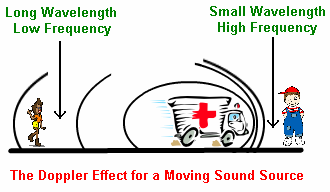
Law radar relies on the same principle. It shoots radar forward, and the radar waves go compressed (if the target vehicle is getting closer) or stretched out (if the target is moving away), and the radar gun measures this alter in frequency and converts it to a speed.
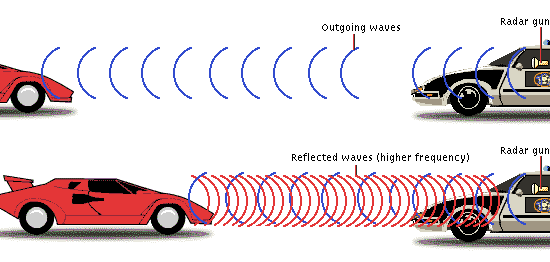
If you'd similar to run into the math behind doppler shift to speed calculations, spotter my video explaining how law radar works. Otherwise you've got the general idea so keep reading. 🙂
Tin can radar track multiple vehicles?
Now police radar guns aren't limited to tracking one vehicle at a fourth dimension. They can actually track and display the speeds of multiple vehicles simultaneously.
- They tin rail vehicles moving towards the radar gun or away from information technology.
- They tin can rail vehicles alee of the police officer (using the radar gun's front antenna) or backside the police officer (using the radar gun'southward rear antenna).
- They tin can track 2 vehicles moving together in the same direction, just at different speeds, ane slower and a 2d faster.
Older radar guns could only track the strongest radar signal, typically the closest and/or largest vehicle that returns the strongest reflection. What if there's a smaller target that's farther away and presents a weaker return signal? Well nearly new radar guns have what's chosen "fastest manner" capabilities where they can track both the strongest and the fastest signals simultaneously.
Have a look at the photo below. You lot'll run across the radar gun non merely tracking vehicles in both directions, but you'll also see information technology tracking faster vehicles (carmine arrows) farther away.
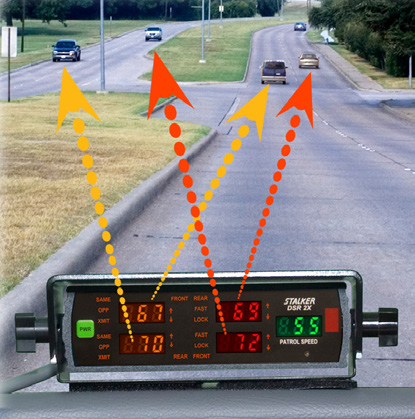
If you'd like to learn a little bit more about the scientific discipline and math behind fastest mode performance, watch my video on how fastest mode radar works.
What are X ring, K ring, & Ka band?
If y'all've ever looked at radar detectors, you've probably noticed that they advertise being able to detect X band, Yard ring, and Ka band radar, but what does that mean?
In short, police force radar guns are typically designed to operate within several frequency ranges. Yous've got X band (~ten.v GHz), K band (~24 GHz) and Ka ring (~33-36 GHz). Older radar guns used lower frequency antennas similar X ring, merely as applied science improved and things got smaller, radar gun manufacturers started switching to K ring and then to Ka band, primarily because they let for smaller antennas which takes upwards less room within a constabulary officer'south already crowded vehicle.
What do those bands mean on my radar detector?
Ka band is the most mutual band of radar in use around the The states today. Fortunately at that place'south non many other devices around us that besides employ Ka ring and so when your radar detector alerts to Ka, it'southward almost always a police officer.
K band is regularly used around the country besides. The annoying thing is that there's lots of other things that employ Thou ring as well including speed signs, automatic door openers, nearby vehicles with radar-based collision avoidance systems, and so on, so you'll desire a modern radar detector that's practiced at filtering out the many new false (aka non-police) alerts you'll run into on K ring. Acquire nigh the best radar detectors here.
X band has been mostly phased out of the US. You'll see it in use actively in OH, NJ, and in a few remaining rural areas effectually the country, but in most of the country you can safely just disable X band and become rid of all the false alerts from door openers that you'll come across. Awesome.
Click here to find out what radar bands are in apply in your expanse.
How authentic are police radar guns?
Considering police radar guns are designed to be used to issue speeding tickets and the speeds they display demand to be correct, they need to be accurate, inside a certain tolerance. Radar guns are mostly authentic within +/- 1 mph or +/- 2 kph. So they won't always be exactly spot on, just oft will be or at worst, extremely shut.
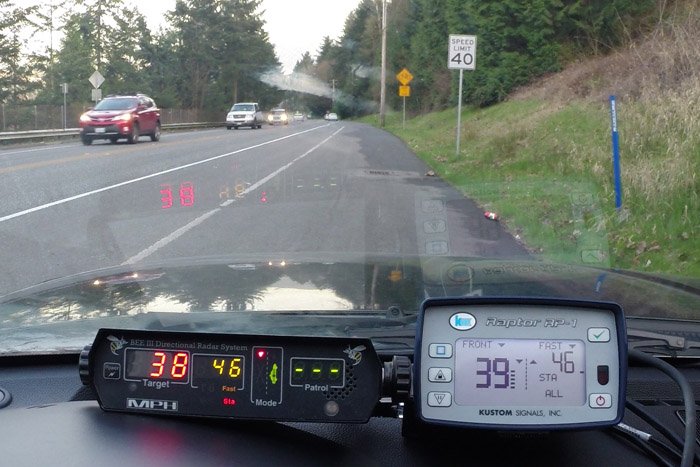
Take a look at the photo below of ii unlike radar guns beingness used simultaneously to track vehicles up ahead. You'll notice both radar guns are displaying ii speeds, the strongest (closest) target speed is on the left and the fastest target speed is on the right. You lot'll observe that the strongest speeds don't friction match exactly while the fastest speeds do. This may seem weird, but because radar guns merely need to be accurate to +/- 1 mph, this is completely normal and okay.
How do law officers verify radar gun accuracy?
In order to verify the accuracy of the radar guns, constabulary officers generally need to exam their radar guns at the offset and ending of every shift, though this can vary from place to identify. Traditionally they do what's called a tuning fork test where the officeholder strikes a tuning fork that vibrates at a known frequency, puts it in front end of the radar gun antenna, and confirms that the radar gun displays on screen the speed that correlates with the tuning fork's frequency.
Police officers typically need to have their radar guns calibrated periodically likewise, say every yr or two, depending on local regulations. When beingness calibrated, the guns are all tested to ensure they're working properly. Sometimes police departments forget to accept their radar guns calibrated on time so a common way to fight a speeding ticket in courtroom is to ask see the records of when the guns were last calibrated and see if it has been done recently. Consult local laws or ask a lawyer to find out how often constabulary demand to practise it in your area.
Then long equally the radar gun is operation properly, the speed displayed on the radar gun will be correct, with an accurateness between but +/- one mph or +/- 2 kph.
What are the different radar gun modes?
Police radar guns accept several different modes of operation. They tin either be always transmitting (constant on) or they tin be temporarily turned off and on in a specific way when the officeholder sees a vehicle they want to target. Usually this is done intentionally to defeat radar detector by preventing drivers up alee from getting advanced warning. Usually this isn't necessary considering and then few drivers run radar detectors and so running constant on is like shooting fish in a barrel, simply some places do utilize these techniques. Let'due south take a look at the different radar gun modes of operation and how they work.
Constant On
"Constant on" (C/O) is the normal fashion of using radar. The officer just leaves it on, transmitting continuously. In this mode, they tin can easily clock everyone driving past without having to mess around with their radar gun. They can sit down back on the side of the road or transmit while driving and when a big number pops up on the screen, winner winner chicken dinner. Time to make a stop.
Instant On
In an effort to thwart radar detector users, decades ago radar gun manufacturers added the ability to put the gun into "hold" meaning that the gun is turned on, but not transmitting. When it'due south in concord, the radar gun isn't able to display speeds, but radar detector users will no longer become advanced warning the way they would against constant on. When the officer sees a motorcar upwardly ahead that they want to measure the speed of, they take their radar gun out of hold and tell it to transmit, a technique known equally "instant on" or I/O.
The pull a fast one on to countering instant on is to to accept 1) a very sensitive radar detector and two) a rabbit upwards ahead of y'all. The idea is that a sensitive radar detector will pick up I/O as information technology'southward being used on vehicles up ahead of yous and then y'all'll rely on traffic upward ahead (such as a rabbit.. a commuter up ahead that'due south cartoon fire while you sit back a little ways behind him) to alert you to the presence of I/O before you get into the danger zone.
Radar detector manufacturers sometimes annunciate that their radar detectors tin can notice "the latest instant on guns," but that's only marketing mumbo jumbo. Every radar gun for decades has been able to do this. A radar detector manufacturer advertising this is the equivalent a Television set manufacturer making a big deal nigh the fact that they have the latest and greatest new feature called a "mute button." Wow… 😀
Every radar detector on the planet can detect instant on. When there's radar present, your detector volition alert. No big bargain. 😉
Quick Trigger
Quick trigger (QT) is a variant of instant on. The idea is that a law officer will fire an instant on shot, simply just long enough for a speed to pop up on their radar gun and so they put the gun back into hold. The goal is to get a target vehicle'due south speed in a way that doesn't warning the radar detector at all considering it'due south likewise fast for the radar detector to register.
Some radar guns like the Stalker DSR 2X and Decatur Genesis Two even take built-in QT capabilities where they can fire 0.5 sec shots automatically to simplify the process for police officers wanting to avert triggering radar detectors up ahead.
This worked dorsum in the day when radar detectors were slower, simply now that detectors are much faster at scanning for all the different possible frequencies, thanks to the appearance of digital detectors with DSP or analog detectors with band sectionalisation that permit you lot to tell it to not waste time scanning unnecessary frequencies (band segmentation explained), detectors are now very fast at alerting to brief bursts of radar then there's no event detecting QT when using a mod radar detector.
Pop
Speaking of automated QT, MPH Industries developed a unique feature for some of their radar guns called Pop radar. The idea is that instead of shooting 0.5s shots which are detectable, they'd shoot significantly faster shots of radar at only 67ms (0.067s) or even 16ms (0.0016s). This is fashion too fast for any radar detector to warning to. Notwithstanding, there are a number of technical limitations with this.
You see, by turning a radar gun on and off this quickly, you don't requite the gunn oscillator inside the antenna (the part that'southward actually generating the radar signal) enough time to stabilize and transmit a consequent frequency. Without a stable signal frequency, you'll have a difference betwixt what the radar gun thinks information technology's transmitting and what it'south actually transmitting, and then the radar gun will brandish incorrect speeds. Whoops! The farther away the target vehicle, the more likely the errors will be and the bigger the errors will be.
Considering of this, and because a police officeholder needs to get a tracking history too when using the radar gun (seeing the machine driving at speed for a menstruation of time, confirmation with the sound the radar makes called the sound doppler, and so on), MPH says that Popular is intended to be used but to preview the speed of a vehicle ahead and when the officer wants to issue a commendation, they should switch back to using normal radar.
In practise, Popular is near never e'er used. Information technology's non accurate and it's not legal to consequence tickets on its own. The officer needs to press a few buttons to get in and enable POP which makes it extra work for him to use. In that location are lots of bug with Popular it's recommended to disable Popular detection on your radar detector so that your detector isn't unnecessarily hyper-focused on detecting Pop radar that isn't used in the first place. By doing so, y'all'll take better performance against traditional radar, plus you'll avert all the false POP alerts that your detector will otherwise give you. (Just considering your detector alerts to POP radar when Popular is enabled does not mean that Popular is actually being used. POP falses are very common.)
So just disable POP…
How quickly can a police officer become my speed?
Speaking of radar guns operating quickly, what if information technology'south used in the way it's supposed to exist, such every bit if an officer is using instant on? Past the fourth dimension your radar detector goes off, are you able to brake in time to avoid him getting your speed?
Well radar guns typically can lock in a speed in nigh 0.3 sec. By the fourth dimension your radar detector alerts, your brain processes what's happening, your foot moves over to the brake, and your car starts losing momentum, your speed is already going to be locked into the constabulary officer'southward radar gun.
If you'd like to see this, allow's take a await at a all-time case scenarios. Hither'due south a Stalker DSR 2X radar gun shooting I/O. The radar detector user is fifty-fifty expecting the shot and already has their foot on the brakes. When their radar detector goes off, they immediately slam on the brakes. As you'll meet, you lot can't outbrake I/O…
This is why it'due south then important to accept a rabbit up alee and a sensitive radar detector (avoid the cheapy $50-100 detectors, for case) then that you can selection up I/O being used upwardly alee.
Sure it'south possible to avoid a ticket against I/O if y'all get lucky and the officer had his radar gun in the incorrect mode (clocking the incorrect direction of traffic), in that location'south no convenient turn-around spots for him, and so on, so sure yous could avoid a ticket fifty-fifty if you become I/Endemic, but in practice, there'due south no fashion you're going to outbrake the radar gun, fifty-fifty with carbon ceramic brakes on dry out pavement. 😉
How far away can a radar gun go your speed?
What almost distance? How far away can a police officeholder get your speed?
Information technology really depends on the radar gun as well as terrain, but in ideal conditions, radar guns can become your speed a mile away or more than. Larger vehicles like big semis nowadays an even larger reflection and so they can be clocked farther away. Smaller vehicles like cars or even motorcycles nowadays smaller reflections so they'll need to be closer. Equally a general rule, if the radar gun has a clear line of sight view of the target, they'll be able to get its speed.
The things that will prevent a radar gun from being able to lock in a speed are things like hills, curves, buildings, or trees. Radar guns do need direct line of sight to work (as opposed to radar detectors that tin run across around bends thanks to reflections) so anything in the way of the radar gun's betoken, including traffic and other vehicles, can foreclose the radar gun from acquiring a target at a distance.
Dashmount vs. handheld vs. fixed radar?
Radar guns come in several different form factors.
Dashmount radar guns are very common. They typically include several components including the counting unit (the brains of the radar gun, plus the display that is typically attached to it), one or 2 antennas (for front or front and rear functioning), and a handheld remote.
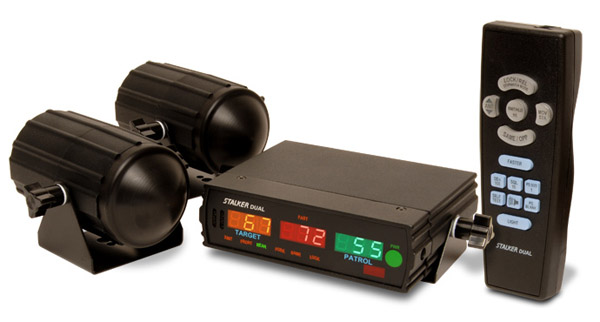
Dashmount law radar gun (Stalker Dual)
Dashmount units are common inside of police cruisers because of how easy they are to operate while driving. They also brand motorcycle versions with waterproof components.
Handheld radar guns also exist. These are more than mobile, they can easily be aimed in different directions such as out the side window, and they're as well mutual for motorcycles because the officer tin rapidly and hands pull over and kickoff clocking vehicles without worrying which direction their cycle is pointed.
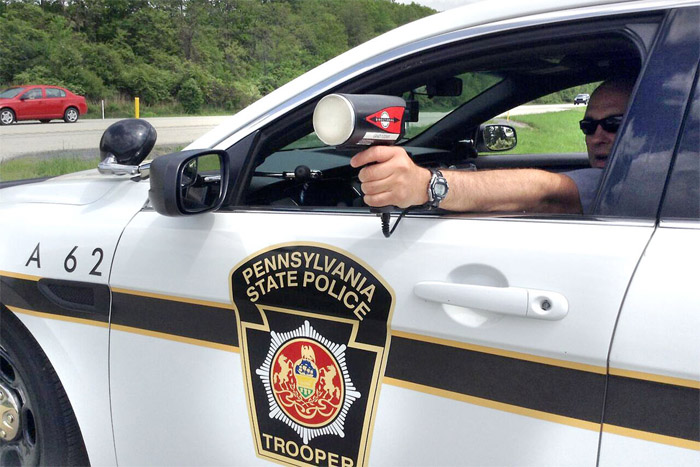
Handheld radar gun (Decatur Genesis Handheld Directional)
Some handheld radar guns even have removable handles then that you can slide them on to an optional dashmount and get both dashmount and handheld operation out of 1 radar gun.
There are also fixed photo radar systems which operate in tandem with a photographic camera. The idea is when a speeding vehicle drives past, the photographic camera takes a photo with the license plate and they mail service the driver the speeding ticket in the mail.
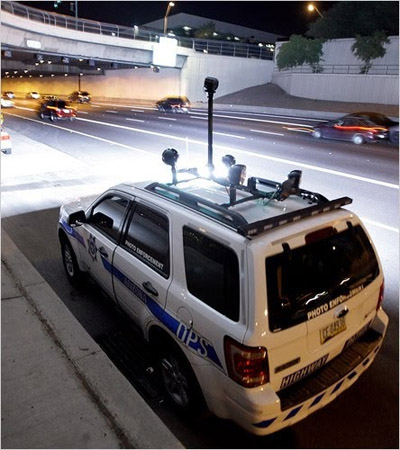
Photo Radar SUV
Photo radar is less mutual in the Us, but it is very mutual overseas and is starting to prove up more and more hither Stateside also.
How do radar detectors assistance you avoid tickets?
Radar detectors are THE tool to aid yous avoid speeding tickets from radar guns.
The general idea with radar detectors it that they're designed to alert you to the presence of law radar up ahead, earlier yous're close enough to where the radar gun can learn your speed. Radar detectors can detect law radar much further away than radar guns tin can clock traffic upwardly ahead, so the odds are in your favor hither. Radar detectors are designed to give y'all plenty of avant-garde warning so that you can double-cheque your speed accordingly and avoid a speeding ticket.
There'due south a lot of great radar detectors out there and there'south also a lot of lousy ones. If y'all'd like help picking out a radar detector, take a await at my Radar Detector Buyer's Guide.
What about police radar jammers?
What almost instead of detecting radar, we wanted to jam the police officeholder'southward radar gun and prevent him from getting our speed in the beginning place?
Well information technology turns out that radar jammers are highly illegal. We're talking $50,000-$100,000 fines plus jail fourth dimension. Information technology's a big bargain and not something you desire to mess around with.
Not only that, but radar jamming is technically challenging every bit well. It used to be doable with some of the older analog X and K band radar guns, merely it's much more difficult against the newer digital Ka band radar guns. There were a few companies that used to sell radar jammers years agone, just when radar guns became more sophisticated and the FCC started shutting down radar jammer companies, no company has bothered attempting to develop or sell radar guns anymore… for obvious reasons. 😉
The 1 "sort of" exception is Rocky Mountain Radar who advertises a jamming-like characteristic they call "scrambling." Information technology'southward supposedly a passive grade of jamming that wouldn't violate the laws regarding active jammers, simply the fact is that information technology doesn't work at all. I've tested the 2 about recent RMR detectors against a diverseness of dissimilar constabulary radar guns and they had zero impact on them. Read my review of the Rocky Mount Radar Judge for more than info. Rocky Mountain Radar are basically scam artists preying on the innocent.
When it comes to radar jamming, in that location are no radar jammers sold that are effective. For more information, read my complete article virtually constabulary radar jammers.
What most police light amplification by stimulated emission of radiation?
In addition to radar, constabulary commonly use light amplification by stimulated emission of radiation guns too. These are completely different than radar guns. They function differently from the law officer's standpoint, they have a number of advantages and limitations compared to radar, and they require completely different tools to combat as a driver.
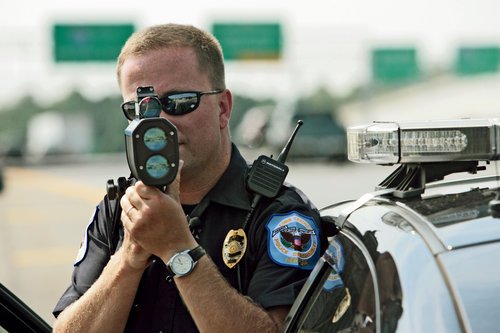
Constabulary officeholder shooting a light amplification by stimulated emission of radiation gun
Radar detectors provide little to no protection against light amplification by stimulated emission of radiation. Because a laser beam is very pinpoint and doesn't spray everywhere like a radar gun, a radar detector user volition mostly receive no advanced alert confronting laser and by the time the officer shoots your car, because the beam is then narrow and thin, if your radar detector with its built-in laser detector goes off at all (it often doesn't, even when directly targeted), the officer already has your speed.
To gainsay light amplification by stimulated emission of radiation, y'all need a expert laser jammer. For more information about laser, read my review covering the best light amplification by stimulated emission of radiation jammers.
To larn all almost laser, read my follow-up commodity explaining how police laser works.
How to avoid speeding tickets?
So now that we know all most police radar guns, how do we avert getting tickets from them? Here's several bones, just key suggestions:
- Get a good radar detector
- Set up your radar detector to optimize both its performance and its false filtering capabilities
- Be wary of officers using instant on, especially hiding around a curve or beyond the crest of a loma
- Use a rabbit upwardly alee to draw fire
- Run Waze on your phone to alert you to constabulary up ahead
By understanding a footling bit nigh how radar guns work, you'll have a better idea of how to protect yourself from them. 🙂
Click hither to read my affiliate disclosure.
Source: https://www.vortexradar.com/2017/11/police-radar/

Post a Comment for "Get to Know Laser Beam a Bit Better Before They Return Again for Their Another Amazing Performance"